Startup credits: which route applies, and what the award covers
How AWS, Google Cloud and Notion distinguish startup applicants, plus the difference between cloud credit and a bill that disappears.

Startup credits can cover eligible cloud usage or provide temporary software access. The award depends on the business and its application route. A solo project, a small agency and a funded software startup can land on different offers, even when they arrive from the same headline.
The useful question is which route matches the business being built. I’m less interested in the largest number on the page than in the part that could actually cover its work.
The application routes are different
| Programme | Route | What changes the offer |
|---|---|---|
| AWS Activate Founders | Direct application for self-funded startups | Eligibility and the approved award |
| AWS Activate Portfolio | Application using an Activate Provider's organisation ID | An eligible investor or accelerator relationship |
| Google for Startups Cloud Program | Pre-funded or eligible early-stage startup | Funding stage and AI-first qualification |
| Notion for Startups | Application for temporary Business-plan access | Business type, employee count, existing account and partner affiliation |
AWS: service credit against an eligible bill
AWS's promotional-credit terms say credits offset eligible service charges and cannot be exchanged for cash. Charges above the available credit are billed to the account.
Those terms also exclude specified services and transaction-based taxes, and attach an expiry to the credit. An award therefore doesn't mean every AWS expense is covered indefinitely.
In a hypothetical example, a $1,000 award and $350 of eligible usage before expiry mean $350 of usage was covered. The unused $650 is not another $650 of savings. If those services would never otherwise have been bought, even the $350 represents supported experimentation rather than a reduction in an existing bill.
AWS Activate application routes
Google Cloud: stage changes the programme
Google Cloud separates pre-funded projects from eligible early-stage startups and advertises different awards for AI-first businesses. That makes the funding stage and the actual programme route more informative than quoting its maximum credit headline to every new business.
Google for Startups Cloud Program
Notion: the smaller-business detail matters
Notion advertises one, three and six months of Business-plan access with Notion AI. Its FAQ places businesses with fewer than ten employees, agencies, consultancies and other service businesses on the one-month route. The longer offers are aimed at qualifying startups, with the six-month offer tied to a selected partner.
Its general eligibility also requires a non-paying Notion account, a work email, fewer than 100 employees and no previous Notion promotion. Being a newly registered business does not by itself establish the longest offer.
Notion's startup offer on Sideperk
What the useful benefit looks like
I would describe an award as time and eligible usage covered, with the normal bill beside it. That makes it easier to see what happens when the project outlives the offer. A short trial of a team workspace and credit for a running cloud service solve different problems.
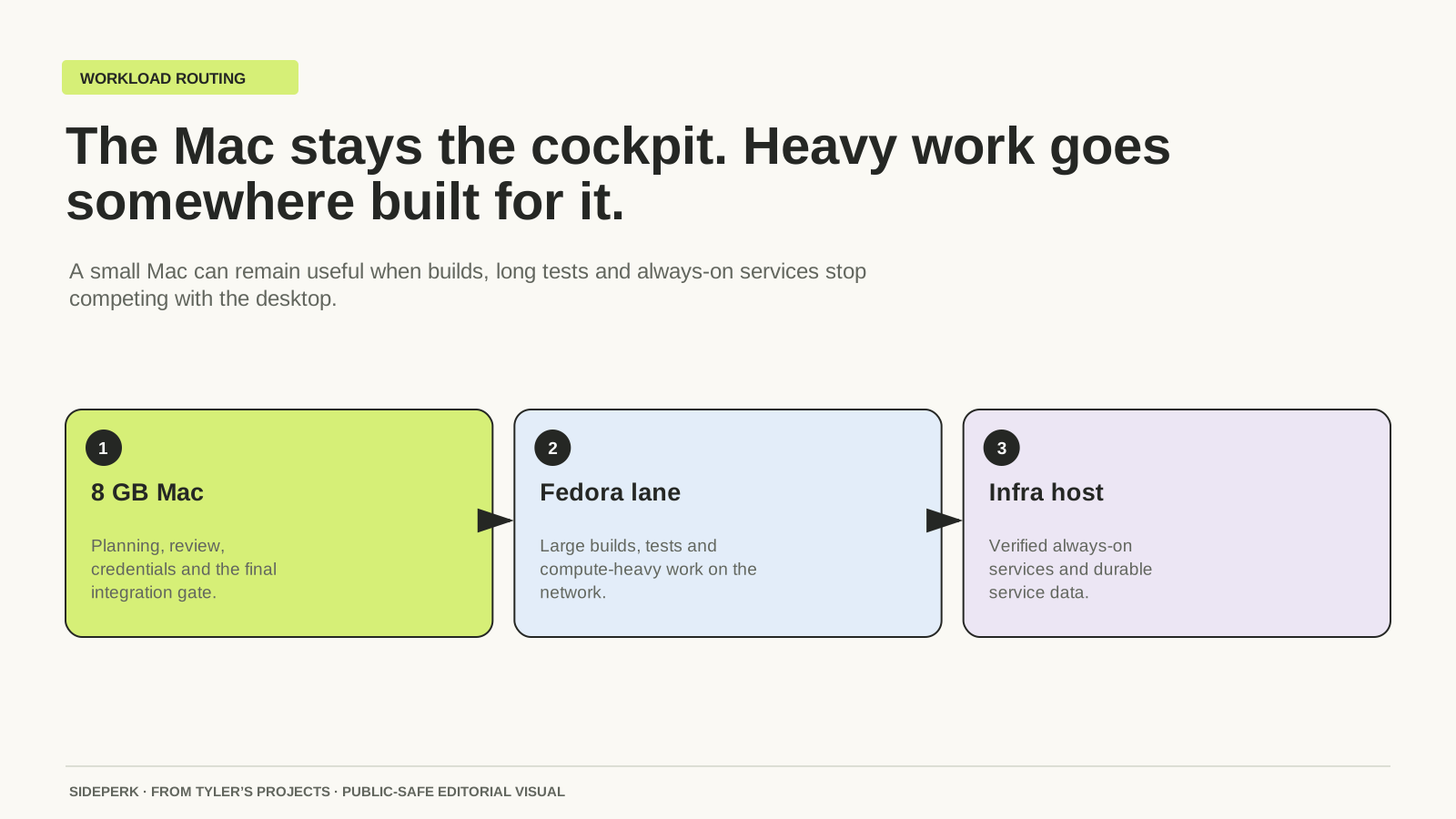
For a small build, the practical comparison can also include a simpler hosting setup or a workload that runs on hardware already available. My own Mac and remote-worker setup is one example of how the shape of the work affects where it runs.
How I keep an 8 GB Mac useful for building
Sources and further reading
Sources checked