How I turned a dead record label into an archive and my old songs into a radio station
Fracture Recordings stopped in 2016. I gave the label a digital archive and my Boski tracks and mixes a radio station, with a few very ordinary web problems along the way.
Project work Archive work from 2025; radio repairs April 2026; domain move September 2026
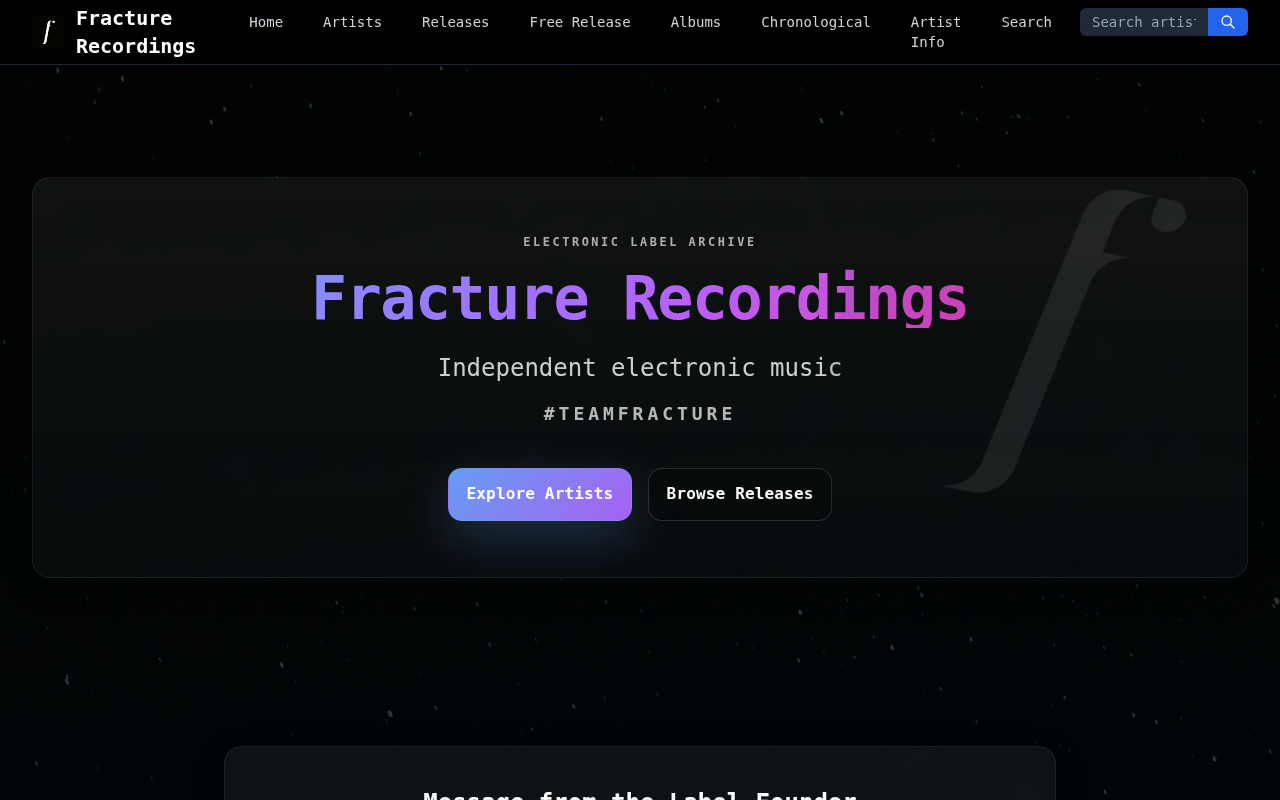
Fracture Recordings stopped in 2016. Nearly a decade later, I still had the music, artwork and bits of the old website. I didn't want to start running the label again. I wanted the work to have a proper home, where someone could find a release, see who made it and hear it in context.
I also had my own tracks and mixes under the name Boski. Those became BOSKI.FM, a radio-style way of listening to the old material. The two sites have different jobs: Fracture is the label archive; Boski is the listening experience. Building both has taught me quite a lot about what gets lost when a project stops being active.
The old catalogue was a collection of clues
Fracture was a London house label I founded in 2014. Going back through it meant dealing with audio, cover art and database records that described the same releases in slightly different ways. There were numbered releases, free releases and compilations. A folder of files did not explain all those relationships on its own.
The cover-art folders were useful for catalogue numbers and the way a release had been presented. The database supplied track listings and other detail. Neither was a complete answer. An early report and the public catalogue even disagreed on totals, so I have avoided turning a big number into the headline of this story.
That left some gaps and conflicting records. The archive can make the music easier to find without settling every detail of its history. I would rather keep that distinction clear than make the story sound tidier than the evidence.
A radio station gave the music a different use
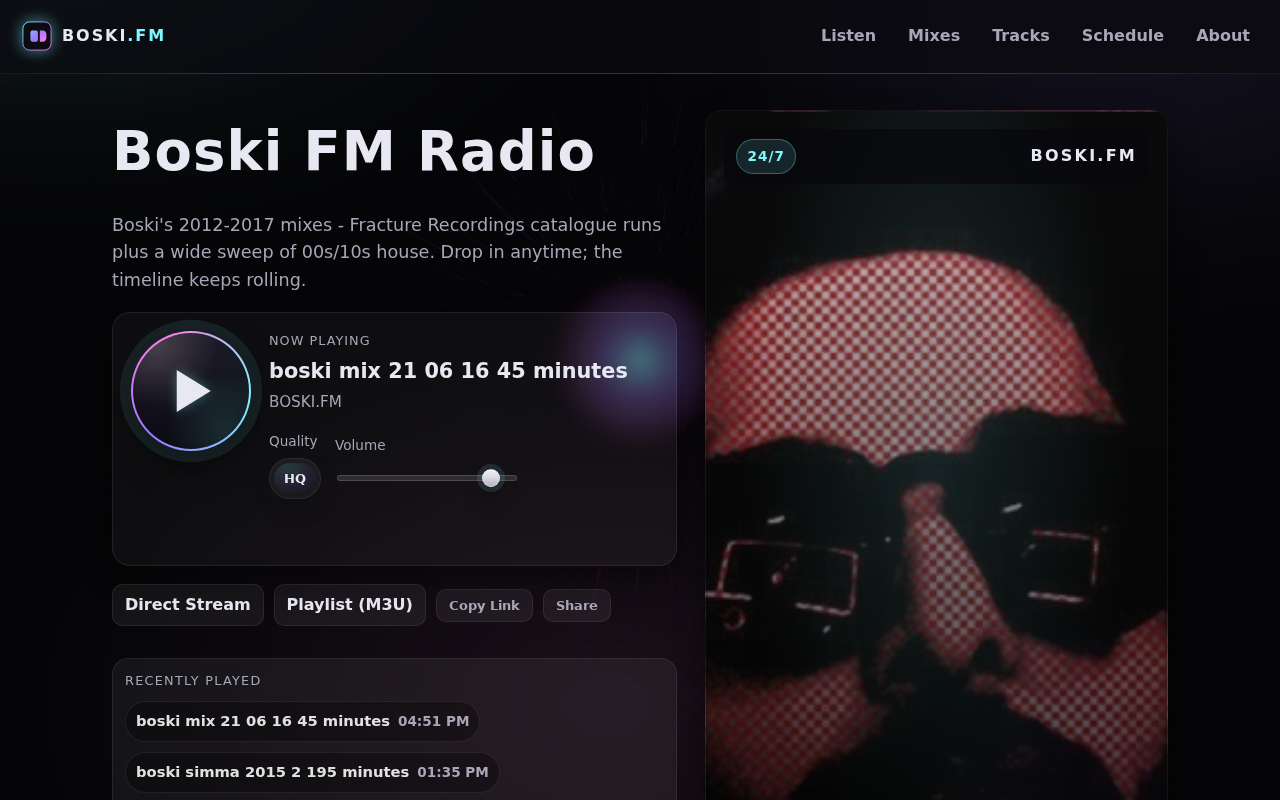
The Fracture site is arranged for browsing artists, releases and the chronology. BOSKI.FM is built around a rolling programme of my old mixes, including Fracture sessions. There are tracks and mixes pages as well, but the live page gives the collection a different feel. I can join whatever is playing rather than decide on a file before I hear anything.
The recordings come from roughly 2012 to 2017. That makes the station quite a personal archive: music I made, sets I recorded and the house music around that period. A new player has given those old recordings another way to be heard, without pretending I recorded them last week.
The stream needed different treatment from a track
The early radio work included buffering gaps. In April we increased the read buffer in the Node.js stream from 64 KB to 256 KB and started creating 128 kbps radio copies of the longer mixes, which had been 320 kbps. The original mixes were backed up first. The individual tracks were outside that re-encoding job.
That was a useful distinction to make. A long-running radio stream and an individual track download do not have exactly the same delivery needs. Smaller radio copies could reduce the data being pushed without making the lower-bitrate version the only copy I had.
We also checked seeking in the track player before changing it. The server was already handling HTTP range requests and returning partial content correctly. Scrubbing was not the fault we were looking for. That let us leave the working part alone and focus on the stream that was actually misbehaving.
The tracks existed. The page was hiding them
One bug was particularly annoying: valid tracks on the server were missing from the public list. The browser code filtered out any track without artwork, label information or a SoundCloud link. Missing optional details were being treated as a reason to hide the music itself.
Removing that filter brought the tracks back. I prefer a plain row with an incomplete detail to a tidy-looking archive that quietly leaves something out. It is an easy mistake to make when building a new interface around old records: the neatest records get shown, and the awkward ones disappear.
The player redesign then hit another problem. The browser blocked inline styles because of the site's Content Security Policy, so the new CSS existed in the page but was not being applied. Moving those styles into an external stylesheet fixed the mismatch. I did not need a looser security policy or another redesign.
The archive also needed an address I still controlled
In September the old Fracture domain expired. The replacement became fracturerecordings.tylerbuilds.com, under a domain I was already maintaining. We added the hostname through Cloudflare and Caddy, obtained a certificate and tested the homepage and a release page at the new address.
It was a small piece of work compared with reconstructing a catalogue, but an important one. An archive that exists on my server and an archive someone can reach from an old portfolio link are different things. The address and the links to it need looking after as well as the application.
What this left me with
Fracture now has a public archive, and BOSKI.FM gives my tracks and mixes somewhere to keep playing. They are still projects I have to maintain. The catalogue has historical gaps, the player has had bugs, and a domain can expire while the files underneath it are perfectly intact.
The most useful choices were keeping the originals separate from delivery copies, showing incomplete records rather than hiding them, and giving the archive and the radio different purposes. Those decisions have lasted longer than the first version of either interface.
I like that the music can still be part of something I use. Fracture does not have to be an active label for its history to matter, and an old mix does not have to sit unopened in a folder. For me, an archive on one side and a radio station on the other was a good way to carry it forward.
Sources and further reading
Sources checked